

How to Change a Euro Cylinder Lock: A Step-by-Step Guide
Table of Contents
- Why Change a Euro Cylinder Lock (and When to Do It)
- How to Measure a Euro Cylinder Lock Before You Buy
- Euro Cylinder Lock Sizes: Finding the Right Fit
- How to Remove a Euro Cylinder Lock
- What to Do When a Euro Cylinder Lock Is Stuck
- Fitting the New Cylinder and Testing the Door
- Common Mistakes to Avoid When Changing a Euro Cylinder Lock
- Frequently Asked Questions
Last Updated: 16 October 2026
Why Change a Euro Cylinder Lock (and When to Do It)
A euro cylinder lock is the removable barrel inside your door handle that contains the keyway and the locking pins. Changing it is one of the cheapest security upgrades you can make, and it takes most people under 10 minutes with a single screwdriver.
At Lock Fitter Ltd, we speak to homeowners every week who want to know how to change euro cylinder lock hardware without paying a callout fee. The good news: it is a genuinely simple job. The bad news: most people buy the wrong size first.
You should change the cylinder when:
- Keys have gone missing, or a previous tenant or tradesperson still has a set
- The lock is stiff, worn, or the key sticks
- Your cylinder is a cheap one that snaps easily under force
- You have just moved into a new property
- You want anti-snap, anti-drill, anti-bump protection
The last point matters most. Standard budget cylinders offer very little resistance to snapping, which is a common forced-entry method. Certified anti-snap cylinders built to recognised standards are the practical answer, and bodies such as the Master Locksmiths Association publish guidance on what those standards mean.
How to Measure a Euro Cylinder Lock Before You Buy
Measuring a euro cylinder lock means taking three numbers: the external length, the internal length, and the overall length. Get these wrong and the new cylinder will either stick out of the door or sit too far back to engage the handle.
Here is the method we recommend.
- Open the door so you can see the cylinder from both sides.
- Remove the cylinder from the door first. It is far easier to measure on a worktop than in situ.
- Measure from the centre of the fixing screw hole to the outer edge of the cylinder. That is your external length.
- Measure from the centre of the screw hole to the inner edge. That is your internal length.
- Add the two together. That is your overall length, usually written as external-internal, for example 35-35.
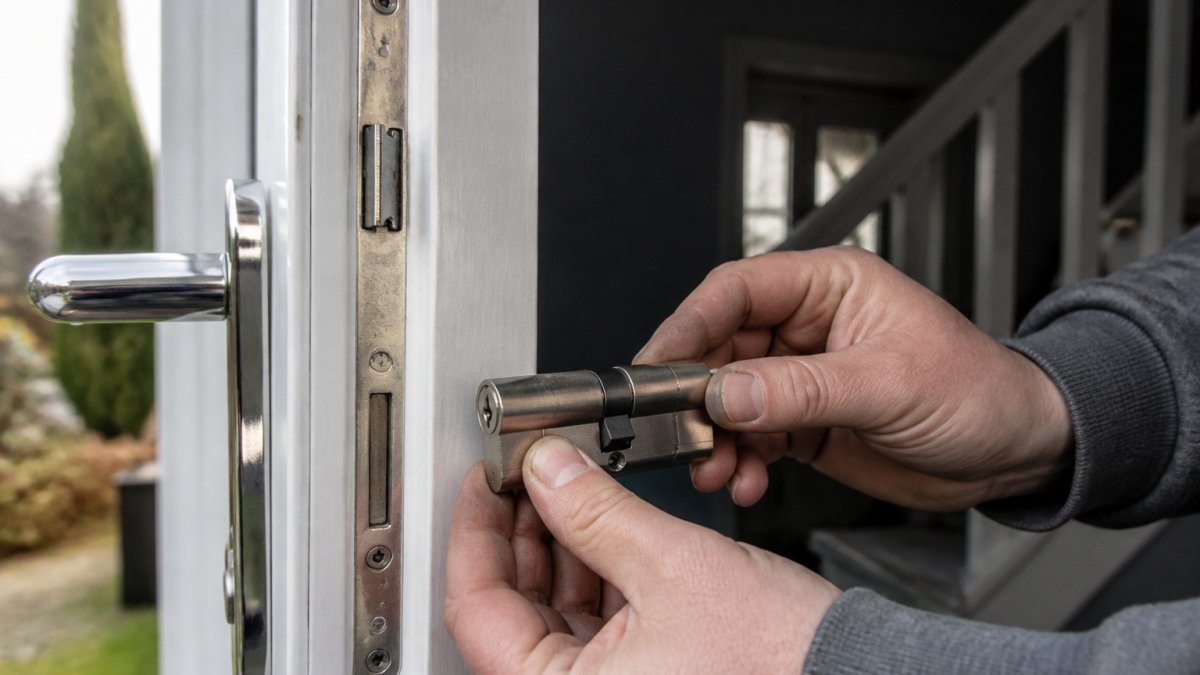
Two rules keep you out of trouble. First, the cylinder must sit flush with the handle face on the outside, never proud of it, because a protruding cylinder is easier to attack. Second, when in doubt, round down rather than up on the external side.
If you are unsure, send us a photo of your measurements and door type. Our team at Lock Fitter Ltd checks sizing queries daily and will confirm the right fit before you order.
Euro Cylinder Lock Sizes: Finding the Right Fit
Euro cylinder lock sizes are written as two numbers, external and internal, measured in millimetres from the centre screw hole. A 40-50 cylinder, for example, has a 40mm internal side and a 50mm external side.
Common combinations sit between roughly 30mm and 60mm on each side. The overall length is what most listings quote, so a 40-50 and a 45-45 are both 90mm overall but fit completely different doors.
Measurement |
What It Tells You |
Why It Matters |
|---|---|---|
External length |
Centre screw to outer face |
Must sit flush, never proud |
Internal length |
Centre screw to inner face |
Must sit flush, never proud |
Overall length |
External plus internal |
The figure most listings show |
For higher-specification replacements, our Secured by Design official scheme guidance explains how police-preferred status is awarded, which is a useful benchmark when comparing products.
How to Remove a Euro Cylinder Lock
Removing a euro cylinder lock takes four steps and one screwdriver. The cylinder is held in place by a single long screw that passes through the door edge, level with the handle.
Here is the sequence:
- Open the door and locate the fixing screw on the door edge, usually just above or below the latch.
- Undo that screw fully and set it aside somewhere safe.
- Insert the key and turn it slightly, roughly 5 to 10 degrees, so the cam lines up with the body.
- Push the key inward and pull the cylinder out towards you. It should slide free.
If the cylinder will not budge, the cam is almost certainly misaligned. Turn the key a fraction more and try again. Do not lever it with a screwdriver, because you will scratch the door face and may damage the lock case.
One more thing worth knowing: on some doors the handle and backplate must come off first to expose the cylinder. If you cannot see the cylinder body, remove the handle screws and lift the handle away.
Ultion 1 Star PLUS Cylinder Lock →
What to Do When a Euro Cylinder Lock Is Stuck
A euro cylinder lock that is stuck usually has one of four causes: a misaligned cam, a bent or worn key, a seized pin, or a cylinder that has been forced and is now damaged internally.
Work through these in order:
- Cam misalignment. Turn the key a few degrees and retry. This fixes most cases.
- Worn key. Try your spare key. If the spare works, the original is worn and should be replaced.
- Seized pins. A graphite lock lubricant can free a stiff cylinder. Avoid oil-based sprays, which attract grit.
- Forced or damaged cylinder. If the cylinder has been attacked, it will not come out cleanly. Stop and call a locksmith.
If the key turns but the door will not lock, the fault could be the multipoint mechanism rather than the cylinder. That is a different job and worth a professional look.
Fitting the New Cylinder and Testing the Door
Fitting the new cylinder reverses the removal process. Slide it in with the key turned slightly, line up the cam, and refit the fixing screw. Tighten it snugly, not hard, because over-tightening can distort the cylinder body and make the key stiff.
Then test properly:
- Lock and unlock with the key at least five times from outside
- Do the same from inside
- Check the cylinder sits flush with the outer door face
- Confirm the handle returns fully and the door latches
- Try the key with the door closed, not just open
If you want a genuine step up in protection, the Ultion ALPS 3 Star PLUS Cylinder Lock is our pick. It is Sold Secure Diamond 2024 rated, the first lock to pass that test, and it protects against six attack methods including snapping, drilling, picking, bumping, thermal manipulation, and twist attacks. Its Always Locked Protection System engages the moment you remove the key, and it carries a £5,000 guarantee. At £63 it costs more than a budget cylinder, and that is the point: you are buying certified resistance, not just a barrel.

If budget is tighter, the Ultion 1 Star PLUS Cylinder Lock at £24 is Police Preferred, Sold Secure Gold, and comes with a dimple key design and key control. Pair it with a 2-star handle to qualify for the anti-snap guarantee.

Feature |
Ultion 1 Star PLUS (£24) |
Ultion ALPS 3 Star PLUS (£63) |
|---|---|---|
Rating |
Sold Secure Gold |
Sold Secure Diamond 2024 |
Police Preferred |
Yes |
Yes |
Anti-snap |
Yes, with 2-star handle |
Yes, SnapStop |
Attack methods covered |
Standard set |
Six, including thermal and twist |
Guarantee |
£5,000 with 2-star handle |
£5,000 |
Keyed alike option |
Yes |
Yes |
Best for |
Tight budgets, rentals |
Front doors, high-risk properties |
Both are DIY-friendly and need no locksmith. Neither requires specialist tools beyond a screwdriver.
Common Mistakes to Avoid When Changing a Euro Cylinder Lock
The most common mistake is ordering by overall length alone. Two cylinders can share a 90mm overall size and still be completely incompatible, because the split between external and internal is what actually matters.
Other errors we see regularly:
- Leaving the new cylinder proud of the door face, which makes it easier to attack
- Over-tightening the fixing screw and distorting the cylinder
- Reusing a worn fixing screw
- Not testing the lock with the door closed
A note on price. Cheaper cylinders look identical to certified ones from the outside, and that is exactly the problem. The difference sits in the internal hardening, the sacrificial cut, and the testing the product has passed. If a lock has no recognised certification, you have no way of knowing what it will do under attack. For landlords fitting multiple units, buying certified cylinders in bulk is the sensible route, and keyed-alike options mean one key per property rather than a drawer full of spares.
Changing a euro cylinder lock is a small job with an outsized effect on how safe your home feels. The hard part is not the fitting, it is choosing a cylinder that is genuinely certified rather than merely lock-shaped. Lock Fitter Ltd stocks Police Preferred Ultion cylinders with Sold Secure Diamond approval, a £5,000 security guarantee, and keyed-alike options for landlords managing several doors. Get the size right, fit it once, and stop thinking about it. Search our range and order with free delivery options available.
Frequently Asked Questions
How do you change a euro cylinder lock?
Remove the handle screws and the cylinder retaining screw on the door edge, then turn the key slightly to pull the old barrel out. Measure the old cylinder, order a matching replacement, and slide the new euro cylinder lock into place. Refit the retaining screw and handle, then test the lock with the door open and closed. The whole job usually takes 20 to 30 minutes with basic tools.
How do you measure a euro cylinder lock?
Measure from the centre of the fixing screw hole to the outer edge of the door on both sides. This gives you the external and internal dimensions, such as 35/35 or 40/45. Also measure the overall length. Write the sizes down before ordering, because euro cylinder lock sizes are not interchangeable. If you are unsure, send a photo of your measurements and door type to a specialist for confirmation.
Can you replace a euro cylinder lock yourself?
Yes. Changing a euro cylinder lock is a straightforward DIY task if the door is undamaged. You need a screwdriver, the correct replacement cylinder, and a few minutes. The main risk is ordering the wrong size, so measure carefully first. If the door frame is damaged or the old cylinder will not budge, call a qualified locksmith rather than forcing it and risking further damage.
What should you do if the euro cylinder lock is stuck?
Do not force the key. Check for debris in the keyway and try a graphite lubricant. If the barrel still will not turn, the internal pins may be worn or misaligned. If it remains jammed, a locksmith can drill it out safely.